Troubleshoot Air Contamination in Hydraulic Systems
Learn how to detect, prevent, and resolve air-related issues that reduce system efficiency and cause cavitation

Air contamination is one of the most common issues in hydraulic systems, affecting efficiency, responsiveness, and fluid integrity.
Defined as anything that degrades system performance, contaminants like air can enter hydraulic fluid in several distinct forms – each with unique implications for troubleshooting and maintenance.
The Four Types of Air Contamination in Hydraulic Fluid
- Dissolved Air: Most hydraulic fluids naturally contain 6 – 12% dissolved air by volume. While stable under pressure, this air can release during pressure drops or fluid agitation, forming bubbles.
- Free Air: Larger air pockets trapped in system components – usually caused by improper filling or inadequate bleeding during start-up. These can be eliminated by pre-filling and proper venting practices.
- Foam: Formed by large air bubbles (typically >1mm) that gather on the fluid surface. In small amounts, foam is often cosmetic – but persistent foaming may indicate air ingress and system agitation.
- Entrained Air: Tiny bubbles (<1mm) evenly dispersed throughout the fluid. More disruptive than foam, entrained air can cause spongy actuation, heat buildup, and cavitation.
Understanding these forms of air contamination helps operators diagnose symptoms like erratic movement, pressure fluctuations, and degraded fluid properties before they evolve into major failures.
Of the four forms of air contamination, entrained air is the most disruptive – posing serious risks to hydraulic fluid integrity and overall system health. These microscopic bubbles not only impair fluid properties, they trigger a cascade of mechanical issues that lead to higher operating costs, wear, and breakdowns.
Entrained air can lead to:
- Unacceptable noise levels caused by micro-bubble collapsing and creating fluid turbulence
- Reduced compressibility, resulting in spongy component response and diminished actuation precision
- Lower fluid viscosity, leaving metal surfaces vulnerable to wear
- Increased heat-load and reduced thermal conductivity, making systems harder to cool
- Severe fluid degradation through overheating and oxidation – leading to burnt seals, reduced lubrication, and long-term component damage
- Cavitation, where vapour bubbles implode under pressure, pitting internal surfaces and destroying pump efficiency
- Overall reduction in system performance, pressure consistency, and reliability
These effects make entrained air a priority concern when troubleshooting performance issues or planning preventive maintenance strategies.
Cavitation Damage
Cavitation is a destructive byproduct of air contamination in hydraulic systems. It involves the rapid formation and collapse of vapour-filled cavities – often invisible to the naked eye – caused by sudden pressure fluctuations in the hydraulic fluid
What is Cavitation?
- Occurs when low-pressure zones allow vapour bubbles to form
- These bubbles implode under higher pressure, generating powerful shockwaves
- Results in intense surface damage, commonly seen in hydraulic pumps, valves, marine propellers and even on fish.
However unlike a fish, hydraulic machinery can’t heal – once cavitation erodes a component, the damage is permanent and can quickly escalate into full system failure.
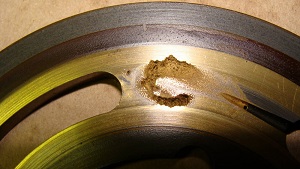
Real-World Example
Cavitation can’t always be seen but Eaton’s training centre in Ohio has showcased extreme cavitation damage caused by excessive air presence in hydraulic fluid – a vivid illustration of why managing air contamination is mission-critical.
Beyond the visible presence of foam, air contamination introduces several telltale signs that can compromise performance and cause long-term damage if left unresolved. Identifying these early can help prevent cavitation, pressure inconsistencies, and fluid degradation. These can include:
- Excessive or abnormal noise – often caused by aeration (air mixing into hydraulic fluid) or cavitation (fluid vaporizing due to low pressure):
- Aeration: Air enters the fluid and generates noise when compressed
- Cavitation: Occurs when fluid levels are low, and air invades system voids, producing a harsh, knocking sound
- High operating pressure – typically triggered when pipework or hoses have too small a diameter to handle flow demand:
- Air blockages increase resistance and pressure
- Fix: Drain the system and replace with properly sized hoses to restore flow
- Gaseous cavitation – even under normal conditions, hydraulic fluid may contain up to 12% dissolved air by volume:
- When pressure drops or temperatures shift, dissolved air releases into the fluid as entrained air, forming bubbles and foam
- This release process is known as gaseous cavitation, and it leads to instability and potential component wear
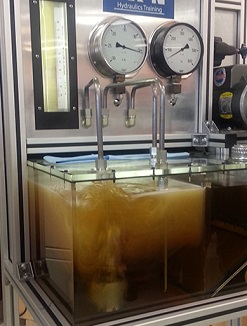
Static Pressure Decrease
A drop in static pressure – especially near the pump inlet – is a common trigger for air contamination due to reduced air solubility. When pressure dips or fluid temperature rises, dissolved air escapes and forms bubbles, which contribute to entrained air, cavitation, and fluid instability.
Factors that Contribute to Pressure Drop at the Pump Inlet:
- Clogged suction strainers or inlet filters – impede fluid flow and reduce inlet pressure, causing dissolved air to escape
- Undersized or blocked reservoir breather – prevents proper air exchange, leading to vacuum formation and air release into the fluid
- Restricted intake line – limits flow and increases velocity, which can induce pressure loss and bubble formation
- Turbulence from isolation valves – disrupts smooth intake, causing localised low-pressure zones and mixing air into the fluid
- Poor inlet design – sharp bends, sudden contractions, or misalignment can lower inlet pressure and induce aeration
- Excessive vertical distance from fluid level to pump intake – can lead to suction difficulty and vaporisation at the inlet, forming bubbles due to the pressure drop
Monitoring inlet conditions and pressure stability is essential to prevent dissolved air from becoming entrained – and to mitigate damage from cavitation or noise symptoms linked to air contamination.
Other Causes of Static Pressure Drop and Entrained Air Ingestion
When troubleshooting air contamination in hydraulic systems, it’s crucial to look beyond pump inlet restrictions – other overlooked factors can trigger the same pressure drops and invite air into the fluid circuit, especially in high-performance setups.
Causes of Decreased Static Pressure
- Changes in fluid velocity caused by sharp transitions or flow spikes
- Flow transients that disrupt pressure balance during rapid actuator movement or cycle shifts
- Faulty or misadjusted anti-cavitation or load control valves allowing sudden pressure collapse at critical points
These pressure losses enable dissolved air to release, forming entrained bubbles that wreak havoc on lubrication and system response.
External Air Ingestion Pathways
Entrained air doesn’t always originate internally – it can be pulled into the system through component faults or fluid handling issues, especially near the pump. Common culprits include:
- Loose intake-line clamps or porous fittings
- Low reservoir fluid levels, allowing air to enter instead of fluid
- Faulty shaft seals that fail under vacuum conditions
- Poor valve adjustments, which draw air past cylinder glands
- Return fluid plunging into the reservoir – causing agitation and bubble formation
- Fix: Fit drop-pipes that extend below minimum fluid levels for calmer return flow
Proactive Prevention is Key
As always, prevention beats cure. Regular inspections, correct valve calibration, proper reservoir design, and vigilant seal maintenance dramatically reduce the likelihood of air contamination and its costly consequences.
We’re a hydraulics ‘hub’, offering thousands of possibilities… how can we help?
Discover more Free Educational Content from our Fluid Power Technical Knowledge Hub…
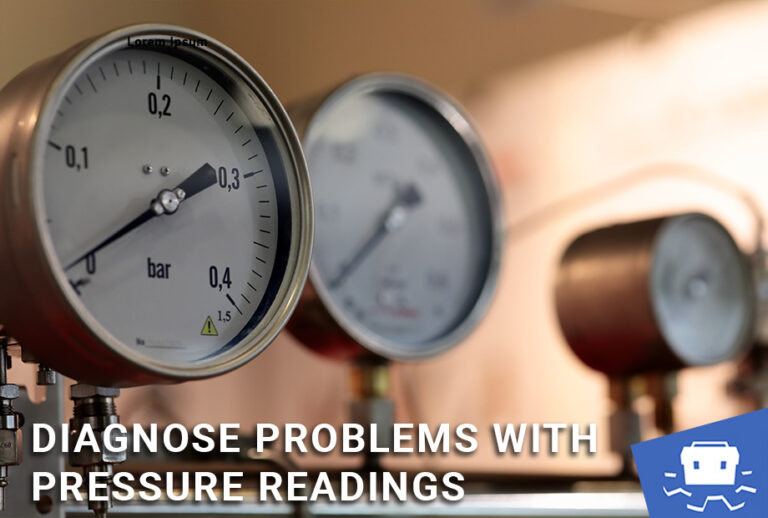
Using Pressure Readings to Diagnose Problems
Effective hydraulic troubleshooting starts with a solid grasp of flow and pressure readings.
In this article, we explore how these values vary across different system types – and what that means for diagnosing performance issues.
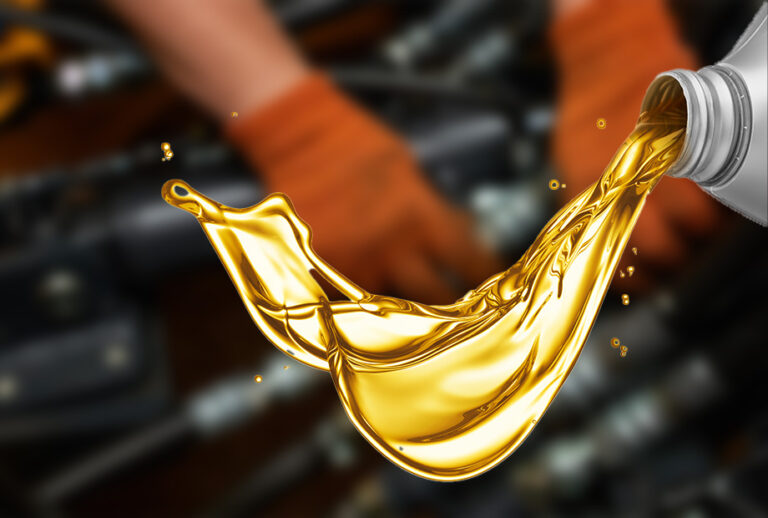
The Ultimate Hydraulic Oil Guide
Hydraulic oil is the life-blood of a hydraulic system but it is often overlooked.
It is crucial to check and maintain hydraulic oil regularly. Find out how in our ultimate guide to hydraulic oil…
6 Steps to Maintain a Healthy Hydraulic System
Routine hydraulic maintenance isn’t just good practice – it’s a smart investment. It helps prevent performance issues and downtime, extends component life, and reduces operating costs.
These six simple steps will help you keep your system running smoothly – time and money well spent.
Stay ahead with expert Hydraulic Insights
Subscribe now for free technical guides, product updates, industry news and trends.
*required